
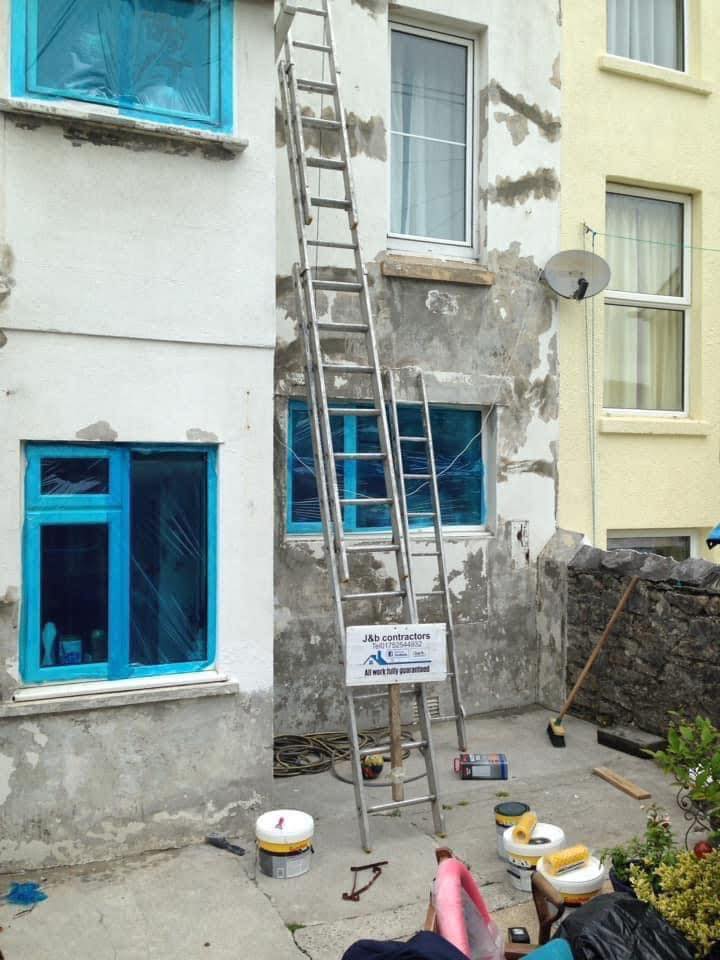
Common Render Problems
Cracking
Hairline cracks are normal as render settles. Larger cracks indicate movement or underlying problems. We assess crack patterns to understand the cause before recommending repair.
Hollow/Blown Render
When render detaches from the wall behind, it sounds hollow when tapped. Blown render no longer protects the wall and will eventually fall away. It needs removing and replacing.
Damp and Staining
Failed render allows moisture penetration, causing damp patches, salt staining, and algae growth. This needs addressing before redecoration.
Impact Damage
Knocked render from ladders, vehicles, or other impact. Repair is usually straightforward but should be done promptly to prevent water ingress.
Repair Options
Crack Repair
Fine cracks can be filled and redecorated. Larger cracks need cutting out and filling with flexible repair materials that accommodate ongoing movement.
Patch Repairs
Localised damage can be cut out and patched. We match texture and finish as closely as possible, though some difference is often visible until painting blends it.
Full Re-Rendering
When damage is widespread, complete re-rendering is the better solution. We remove all existing render, repair the substrate, and apply new render in appropriate materials.
Render Types
Traditional Sand/Cement Render
The standard render for decades. Mixed on-site and applied in multiple coats. Can be finished smooth, scraped, or textured. Requires painting for weather protection.
Through-Coloured Render
Modern renders with colour throughout, not requiring painting. Self-coloured finishes available in many shades. More expensive but lower maintenance.
Lime Render
Essential for older buildings (pre-1920s typically). Lime render allows walls to breathe and accommodates movement that would crack cement renders. We use NHL lime for authentic, appropriate repairs.
When to Use Lime Render
Many Callington properties – cottages, farmhouses, period terraces – were built with lime mortar and lime render. Using modern cement render on these buildings traps moisture and causes damage.
Signs your property needs lime render:
- Built before 1920
- Solid walls (no cavity)
- Existing lime mortar visible
- Previous cement repairs have failed
We assess your property and recommend appropriate materials. Using the right render type is essential for lasting repairs.